


IDC Coin & Bullion | Precious Metals
Buy Platinum Bullion Coins, Bars & Rounds Online
Shop physical platinum bullion from recognized government mints and precious metal refiners. Explore American Platinum Eagles, Canadian Platinum Maple Leafs, platinum bars, and privately minted platinum rounds.
At IDC Coin & Bullion, buyers can compare available platinum products by weight, purity, manufacturer, design, and premium. Whether you're purchasing platinum for its precious metal content or collecting specialized issues, our online categories help you explore current inventory.
Platinum Fundamentals
What Is Platinum Bullion?
Platinum bullion refers to physical platinum products purchased primarily for their precious metal content. Common forms include platinum coins, bars, and rounds.
Platinum is a naturally occurring precious metal with the chemical symbol Pt and atomic number 78. It belongs to the platinum-group metals, which also include palladium, rhodium, iridium, ruthenium, and osmium.
Platinum has important industrial applications, particularly in automotive emissions-control systems, chemical processing, petroleum refining, and jewelry manufacturing.
Direct Ownership
Platinum bullion provides ownership of physical metal in identifiable weights and purity specifications.
Commercial Applications
Automotive, chemical, industrial, and jewelry markets contribute to global platinum demand.
Collectible Appeal
Selected platinum coins may carry premiums based on mintage, rarity, condition, and collector demand.
Government-Issued Bullion
Popular Platinum Bullion Coins
Government-issued platinum coins combine precious metal content with national designs and recognizable minting traditions. Many carry legal-tender denominations.
American Platinum Eagle
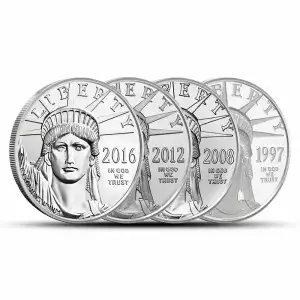
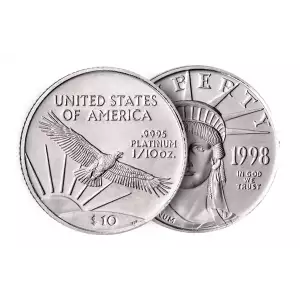
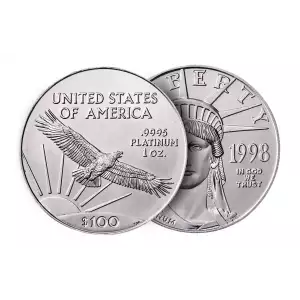
Introduced in 1997, the American Platinum Eagle is the official platinum bullion coin of the United States.
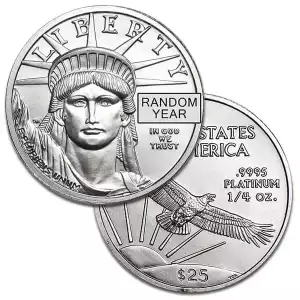
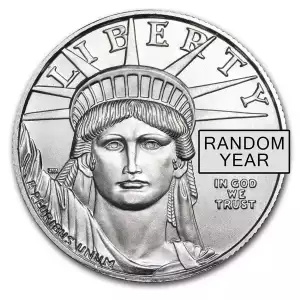
The standard one-ounce bullion coin contains .9995 fine platinum and carries a $100 face value. The series features the Statue of Liberty on the obverse.
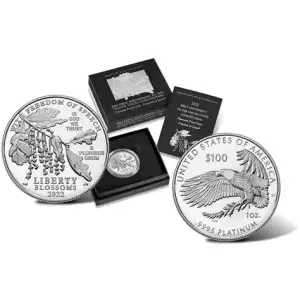
Collectors also pursue proof issues, historical fractional denominations, and professionally graded examples.
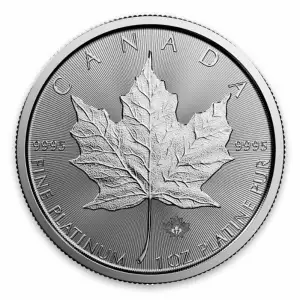
Canadian Platinum Maple Leaf
The Canadian Platinum Maple Leaf is among the internationally recognized platinum bullion coins.
Standard modern one-ounce issues contain .9995 fine platinum and feature Canada's maple leaf emblem.
British Platinum Britannia
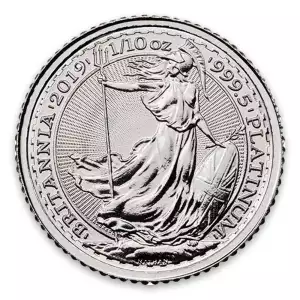
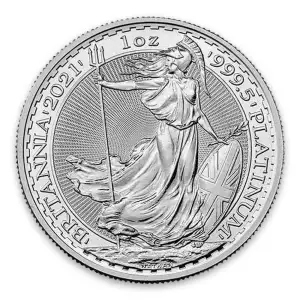
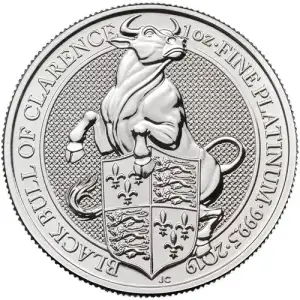
Introduced in 2018, the Platinum Britannia bullion series features the historic personification of Britain.
Platinum Britannias are produced in .9995 fine platinum, with selected one-ounce and fractional issues.
Australian Platinum Coins
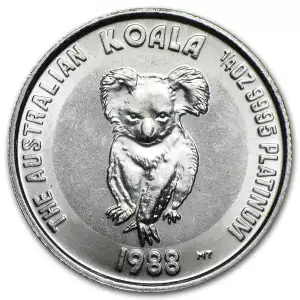
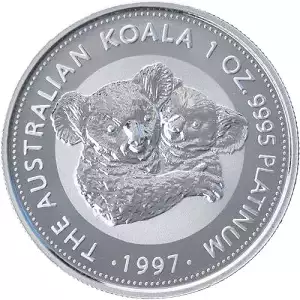
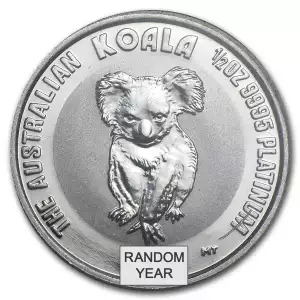
Australian platinum products include wildlife-themed, lunar-themed, and other collectible bullion releases.
Certain issues feature changing designs or limited mintages that may appeal to numismatic collectors.
Privately Manufactured Bullion
Platinum Bars & Rounds
Platinum bars and rounds offer alternatives to government-issued bullion coins. Buyers typically compare these products based on fine metal content, manufacturer recognition, and premiums.
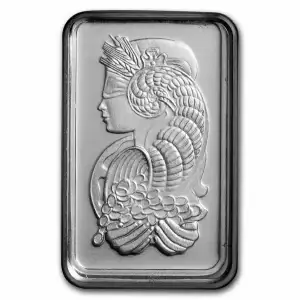
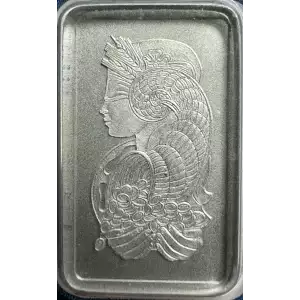
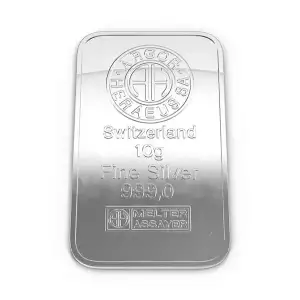
Platinum Bars
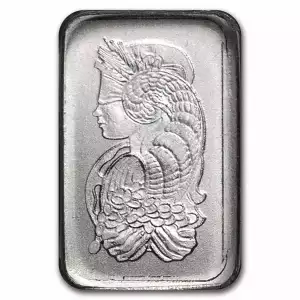
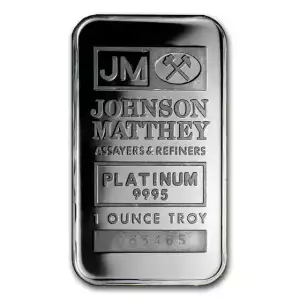
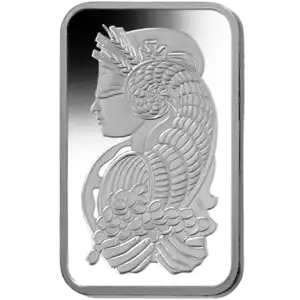
Platinum bars are produced in a variety of sizes, including gram-based weights, one-ounce bars, and larger bullion formats.
Recognized precious metal refining names include PAMP Suisse, Valcambi, and Argor-Heraeus.
Many modern platinum bars are .9995 fine. Some include assay cards, serial numbers, and sealed packaging.
Platinum Rounds
Platinum rounds resemble coins but are generally privately minted and do not carry legal-tender status.
Designs may include historical themes, decorative artwork, or private-mint branding.
Buyers should verify the manufacturer, weight, purity, and premium of each round.
Bullion Specifications
Platinum Bullion Weights & Purity
Platinum bullion is commonly measured in troy ounces. One troy ounce equals approximately 31.1035 grams.
| Weight | Approximate Grams | Typical Use |
|---|---|---|
| 1/10 oz | 3.110 g | Fractional bullion coins |
| 1/4 oz | 7.776 g | Selected bullion and collectible coins |
| 1/2 oz | 15.552 g | Larger fractional bullion |
| 1 oz | 31.1035 g | Widely recognized bullion format |
| Gram-Based Bars | Varies | 1 g, 5 g, 10 g, and other sizes |
What Does .9995 Fine Platinum Mean?
A platinum product marked .9995 fine contains 99.95% platinum by weight. This fineness is common among modern investment-grade platinum coins and bars.
Always confirm whether a listed weight represents total product weight or actual fine platinum content. Specifications may differ for historical or specialty products.
Precious Metals Pricing
Platinum Spot Price, Melt Value & Premiums
The platinum spot price is a market reference, generally quoted in U.S. dollars per troy ounce. Physical platinum coins, bars, and rounds typically sell at a premium above their underlying metal value.
Platinum Melt Value
Approximate melt value is calculated by multiplying the fine platinum weight in troy ounces by the platinum spot price.
Platinum Bullion Premium
Premiums reflect manufacturing, mint recognition, distribution, product availability, and market demand.
How to Calculate Platinum Bullion Value
Approximate Melt Value = Fine Platinum Ounces × Platinum Spot Price per Ounce
Premium = Retail Purchase Price − Approximate Melt Value
These calculations exclude shipping, taxes, transaction costs, and any additional numismatic premium.
Do Fractional Platinum Coins Cost More?
Fractional platinum bullion often carries a higher premium per fine troy ounce than larger products because fabrication and distribution costs are spread over smaller amounts of metal.
Compare the total price per fine troy ounce rather than the purchase price alone.
Compare Precious Metals
Platinum vs. Gold, Silver & Palladium
Different Market Drivers
Gold has a long monetary history and substantial investment demand. Platinum has important industrial uses. Their market prices fluctuate independently.
Different Price & Supply Profiles
Silver has extensive industrial applications and a larger physical retail bullion market. Platinum differs in supply concentration, industrial usage, and product availability.
Two Platinum-Group Metals
Both metals are used in automotive and industrial applications, but they differ in density, demand, supply, and price behavior.
Platinum Market Education
What Influences Platinum Prices?
Platinum prices respond to a combination of industrial activity, supply conditions, investment demand, and global economic factors.
Vehicle Production
Platinum is used in catalytic converters and other emissions-control technologies.
Concentrated Supply
Platinum mine production is concentrated in a limited number of countries, particularly South Africa.
Industrial Demand
Chemical processing, petroleum refining, and other industries use platinum.
Jewelry
Platinum is used in fine jewelry, including rings and other precious metal products.
Investor Activity
Physical bullion demand, financial products, and investor sentiment may influence prices.
Currency & Interest Rates
Exchange rates, monetary policy, and broader economic conditions affect precious metals markets.
Collectible Precious Metals
Platinum Bullion vs. Numismatic Platinum Coins
Platinum bullion products are generally valued primarily for their precious metal content. Numismatic platinum coins may command additional premiums because of rarity, mintage, condition, certification, historical significance, or collector demand.
Professionally graded platinum coins may appeal to collectors seeking particular numerical grades, proof finishes, or specialized coin issues.
Buyer Checklist
How to Buy Platinum Bullion
Review these factors when comparing platinum coins, bars, and rounds.
Choose the Product Type
Compare government-issued coins, privately refined bars, and rounds.
Verify Weight & Purity
Confirm the fine platinum content and manufacturer specifications.
Research the Mint or Refiner
Consider issuer recognition, markings, and product documentation.
Compare Premiums
Evaluate the total purchase cost relative to fine platinum value.
Inspect Condition
Review packaging, surfaces, assay information, and certification.
Consider Resale Liquidity
Research potential dealer demand and bid-ask spreads.
Check Product Availability
Confirm that the selected product is currently offered.
Plan Secure Storage
Protect your bullion and retain purchase documentation.
Bullion Preservation
How to Store Platinum Coins & Bars
Physical platinum should be stored securely and protected from unnecessary handling, abrasion, and potentially damaging chemicals.
Retain original mint packaging, assay cards, certified holders, and purchase records whenever available.
Avoid cleaning or polishing collectible platinum coins. Improper treatment may damage their surfaces and reduce numismatic value.
Clearwater, Florida | Nationwide Online Sales
Buy Platinum Bullion from IDC Coin & Bullion
IDC Coin & Bullion is part of International Diamond Center, serving precious metals buyers and numismatic collectors throughout the United States.
Headquartered in Clearwater, Florida, IDC operates 11 retail locations across Florida and Georgia.
Our retail network serves customers in Clearwater, Tampa, Sarasota, Orlando, Altamonte Springs, Lakeland, Gainesville, Naples, Port St. Lucie, and Savannah.
Buyers in the Tampa Bay area and beyond can explore platinum bullion through our online store. Customers interested in visiting a retail location should confirm product availability and services before traveling.
Frequently Asked Questions
Platinum Bullion FAQs
What is platinum bullion?
Platinum bullion is physical platinum produced in forms such as coins, bars, and rounds, generally purchased primarily for its precious metal content.
What are the most popular platinum bullion coins?
Recognizable examples include American Platinum Eagles, Canadian Platinum Maple Leafs, British Platinum Britannias, and selected Australian platinum issues.
How pure is investment-grade platinum?
Many modern platinum bullion coins and bars contain .9995 fine platinum, equivalent to 99.95% purity. Check each product's specifications.
Is platinum rarer than gold?
Platinum is generally considered geologically rarer than gold. However, scarcity alone does not determine market value.
Are platinum coins better than platinum bars?
Neither format is universally better. Coins offer government-mint recognition and potential collectible appeal. Bars may offer different weight options and premiums.
Does platinum always cost more than gold?
No. Platinum and gold trade independently, and their relative prices change with market conditions.
Why do platinum bullion products have premiums?
Premiums reflect fabrication, distribution, mint recognition, product availability, and market demand.
What is the difference between platinum and palladium?
Both are platinum-group precious metals. Platinum is denser, while their industrial demand, supply characteristics, and market prices differ.
Can I sell platinum bullion to IDC Coin & Bullion?
IDC purchases various precious metal and numismatic products. Visit our Sell to Us page to inquire about platinum evaluations and current buying terms.
