




U.S. Silver Coins: A Complete Buyer's Guide
United States silver coins combine precious metal content, American history, and numismatic collecting opportunities. From modern American Silver Eagles to historic Morgan and Peace dollars, U.S. silver coinage offers a wide range of products for bullion buyers and collectors.
Some coins trade primarily on their silver content plus a bullion premium. Others carry additional value because of their date, mintmark, grade, rarity, or collector demand.
IDC Coin & Bullion offers American silver bullion, classic silver dollars, proof coins, commemoratives, and other U.S. Mint products through its online inventory.
American Silver Eagle Coins
The American Silver Eagle is the official silver bullion coin of the United States. First issued in 1986, it is manufactured by the United States Mint and contains one troy ounce of .999 fine silver.
Its obverse features Adolph A. Weinman's Walking Liberty design, originally introduced on the half dollar in 1916. The reverse design changed during 2021.
American Silver Eagle Specifications
| Specification | Standard American Silver Eagle |
|---|---|
| Issuing Country | United States |
| Mint | United States Mint |
| Fine Silver Content | 1 troy ounce |
| Purity | .999 fine silver |
| Face Value | $1 USD |
| First Issued | 1986 |
| Obverse | Walking Liberty |
| Reverse | Heraldic eagle or eagle landing |
American Silver Eagles are legal tender, although their precious metal value generally exceeds the one-dollar face value.
Type 1 vs. Type 2 American Silver Eagles
Type 1: 1986–2021
Features John Mercanti's heraldic eagle reverse. The Type 1 design was used from 1986 through the first part of 2021.
Type 2: 2021–Present
Introduced in 2021, this reverse by Emily Damstra depicts an eagle coming in for a landing with an oak branch.
2021 Transition Year
Both reverse types were issued in 2021, making it a popular year for collectors assembling Type 1 and Type 2 sets.
Both types contain the same nominal amount of fine silver. Differences in collector value depend on the individual issue, grade, and demand.
Proof, Burnished & Certified Silver Eagles
American Silver Eagles are available in multiple finishes and collector formats.
Proof Silver Eagles
Collector-oriented coins produced using specialized minting techniques. Original U.S. Mint packaging may include a presentation box and certificate.
Burnished Silver Eagles
Special uncirculated collector issues introduced in 2006, often identified by a mintmark and distinctive finish.
Graded Silver Eagles
Coins authenticated and graded by services such as PCGS, NGC, ANACS, or ICG. Prices depend on grade, issue, and collector demand.
Browse certified American Silver Eagles for professionally encapsulated examples.
Morgan Silver Dollars
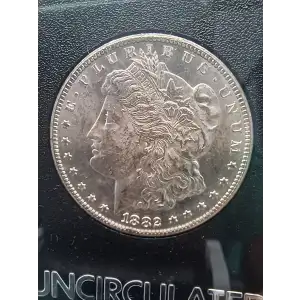
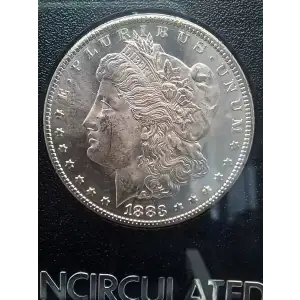
The Morgan silver dollar is one of America's most widely collected historic coins. Designed by George T. Morgan, the original series was struck from 1878 through 1904 and again in 1921.
Classic Morgan dollars contain 90% silver and 10% copper, with approximately 0.7734 troy ounce of actual silver.
Popular Morgan Dollar Categories
1921 Morgan Dollars
A widely encountered final-year issue of the original series, popular with both collectors and silver buyers.
Cull Morgan Dollars
Coins with significant wear, damage, cleaning, or other condition problems. Often purchased as lower-premium historic silver dollars.
Carson City Morgan Dollars
Coins struck at the Carson City Mint, identified by the CC mintmark. Certain examples survive in GSA holders and packaging.
Better dates, scarce mintmarks, and high-grade examples may carry premiums well above their silver melt value.
Explore certified Morgan silver dollars for additional collectible examples.
Peace Silver Dollars
The Peace silver dollar was introduced in 1921 following World War I. Designed by Anthony de Francisci, the coin features Liberty on the obverse and a perched eagle on the reverse.
Original Peace dollars were issued from 1921 through 1928 and again in 1934 and 1935. Like classic Morgan dollars, they contain 90% silver and approximately 0.7734 troy ounce of actual silver.
Common circulated Peace dollars may appeal to buyers interested in historic silver. Key dates, high-relief examples, and higher-grade coins can carry substantial numismatic premiums.
Shop certified Peace silver dollars for professionally graded examples.
90% U.S. Silver Coins & Constitutional Silver
Constitutional silver, often called junk silver, generally refers to older U.S. circulating coins purchased primarily for their silver content.
Common examples include Roosevelt dimes, Washington quarters, Franklin half dollars, and 1964 Kennedy half dollars.
Standard U.S. dimes, quarters, and half dollars dated 1964 generally contain 90% silver. Many earlier types also contain 90% silver, although compositions vary across U.S. coin history.
How Much Silver Is in $1 Face Value of 90% Coins?
A commonly used dealer estimate for $1 face value of average circulated 90% silver dimes, quarters, or half dollars is approximately 0.715 troy ounce of silver.
Unworn standard-weight coins contain approximately 0.7234 troy ounce per dollar of face value. Wear reduces the actual silver weight.
40% Silver Eisenhower Dollars & Kennedy Half Dollars
Not every American silver-colored coin is actually made of silver. Buyers should verify the date, mintmark, and composition.
40% Silver Eisenhower Dollars
Certain collector versions dated 1971–1976 contain 40% silver, with approximately 0.3161 troy ounce of actual silver per coin. Most Eisenhower dollars are copper-nickel clad.
40% Kennedy Half Dollars
Regular Kennedy half dollars dated 1965–1970 contain 40% silver, with approximately 0.1479 troy ounce of silver at standard mint weight.
1964 Kennedy Half Dollars
The original 1964 Kennedy half dollar contains 90% silver and approximately 0.3617 troy ounce of actual silver.
35% Silver Wartime Jefferson Nickels
During World War II, the United States Mint changed the composition of certain Jefferson nickels to conserve nickel for wartime production.
Silver war nickels were struck from part of 1942 through 1945. Their alloy contains 35% silver, 56% copper, and 9% manganese.
Each standard war nickel contains approximately 0.05626 troy ounce of silver. These coins generally feature a large mintmark above Monticello on the reverse.
Not all 1942 Jefferson nickels contain silver. Check the large reverse mintmark before identifying a coin as a wartime silver issue.
U.S. Mint Silver Commemorative Coins
The United States Mint has produced commemorative silver coins celebrating historic events, influential figures, anniversaries, and national institutions.
Classic Commemorative Half Dollars
Includes Columbian Exposition half dollars of 1892–1893 and the 1925 Stone Mountain issue. These coins generally contain 90% silver.
Modern Commemorative Dollars
Includes U.S. Mint commemorative silver dollars honoring American history. Composition and silver content depend on the issue year.
Bicentennial Silver Sets
Special 1776–1976 dated 40% silver quarter, half dollar, and dollar sets were issued in proof and uncirculated formats.
For collectible commemoratives, verify the year, mintmark, condition, original government packaging, and certificate of authenticity where applicable.
U.S. Silver Coin Melt Value & Silver Content Chart
The following table provides approximate actual silver weights for common U.S. silver coins. These figures can help buyers compare metal content before considering collector premiums.
| Coin | Silver Purity | Approx. Actual Silver Weight |
|---|---|---|
| American Silver Eagle | .999 | 1.0000 troy oz |
| Morgan Silver Dollar | 90% | 0.7734 troy oz |
| Peace Silver Dollar | 90% | 0.7734 troy oz |
| 90% Silver Half Dollar | 90% | 0.3617 troy oz |
| 90% Silver Quarter | 90% | 0.1808 troy oz |
| 90% Silver Dime | 90% | 0.0723 troy oz |
| 40% Kennedy Half Dollar | 40% | 0.1479 troy oz |
| 40% Eisenhower Dollar | 40% | 0.3161 troy oz |
| 35% Silver War Nickel | 35% | 0.05626 troy oz |
Actual silver weight in troy ounces multiplied by the current silver spot price per troy ounce. This does not include dealer premiums, transaction costs, or numismatic value.
Silver Bullion vs. Numismatic Silver Coins
American silver coins serve different buying objectives. Understanding the difference between bullion and collectible coins helps buyers compare products more effectively.
| Feature | Bullion-Focused | Numismatic-Focused |
|---|---|---|
| Primary Value | Silver content plus premium | Rarity, grade, date, and demand |
| Examples | Common Silver Eagles, circulated 90% silver | Key-date Morgans, Carson City dollars, proofs |
| Important Factors | Spot price, spread, silver weight | Condition, authentication, population, provenance |
| Pricing Behavior | Generally more sensitive to silver prices | Can move independently of silver prices |
Coin Grading & Certified U.S. Silver Coins
Numismatic grading evaluates a coin's condition using the 70-point Sheldon scale. A grade of MS-70 represents a coin considered perfect under the grading service's applicable standards.
Professional certification may help establish authenticity, condition, and variety attribution. Services commonly encountered include PCGS, NGC, ANACS, and ICG.
A certified coin is not automatically rare or valuable. Its market price depends on the specific coin, assigned grade, population, and demand.
Circulated Grades
Grades such as G, VG, F, VF, XF, and AU describe different levels of wear and remaining detail.
Mint State
MS-60 through MS-70 describe coins without circulation wear, with varying degrees of preservation.
Proof Grades
Proof coins may receive PR or PF designations and additional cameo contrast descriptions.
How to Authenticate U.S. Silver Coins
Authentication involves comparing a coin with published specifications and examining its manufacturing characteristics.
Weight & Dimensions
Compare the coin's weight, diameter, and thickness with specifications for the exact issue.
Design & Mintmarks
Examine lettering, portraits, relief, edge characteristics, and mintmark placement.
Metal Verification
Appropriate precious metal testing can help evaluate composition and identify counterfeits.
Counterfeit Morgan dollars and Silver Eagles exist. No single visual feature or basic measurement guarantees authenticity.
Avoid cleaning potentially collectible U.S. silver coins. Cleaning can permanently alter original surfaces and reduce numismatic value.
Buy & Sell U.S. Silver Coins in Florida & Georgia
IDC Coin & Bullion, a division of International Diamond Center, offers American silver bullion and collectible U.S. coins online to customers nationwide.
Headquartered in Clearwater, Florida, IDC operates 11 retail locations across Florida and Georgia.
Customers in Clearwater, St. Petersburg, Tampa, and other IDC markets can contact the team about buying and selling precious metals and numismatic collections.
Have American Silver Eagles, Morgan or Peace dollars, 90% constitutional silver, or collectible U.S. Mint coins to sell? IDC evaluates a variety of bullion and numismatic products.
Find an IDC retail location or learn more about what IDC buys . Contact the team to confirm location-specific services.
U.S. Silver Coins: Frequently Asked Questions
What U.S. coins contain silver?
Common examples include American Silver Eagles, Morgan and Peace dollars, most 1964-and-earlier dimes, quarters, and half dollars, 1965–1970 Kennedy halves, certain 40% Eisenhower dollars, and wartime silver nickels.
How much silver is in an American Silver Eagle?
One troy ounce of .999 fine silver. The coin carries a legal-tender face value of one U.S. dollar.
What is the difference between Type 1 and Type 2 Silver Eagles?
Type 1 coins feature John Mercanti's heraldic eagle reverse. Type 2 coins feature Emily Damstra's eagle landing design introduced during 2021.
How much silver is in a Morgan dollar?
A classic Morgan dollar contains 90% silver and approximately 0.7734 troy ounce of actual silver at standard mint specifications.
How much silver is in a Peace dollar?
A classic Peace dollar contains 90% silver and approximately 0.7734 troy ounce of actual silver.
What does CC mean on a Morgan dollar?
CC is the mintmark for the Carson City Mint in Nevada. Carson City Morgan dollars are popular with collectors.
What is junk silver?
Junk silver is an informal term for older circulating silver coins valued primarily for their metal content. The term does not necessarily mean the coins are damaged.
How much silver is in $1 face value of 90% silver?
Dealers commonly estimate approximately 0.715 troy ounce for $1 face value of average circulated 90% silver dimes, quarters, or half dollars.
Are all Eisenhower dollars silver?
No. Most are copper-nickel clad. Certain collector issues dated 1971–1976 contain 40% silver.
Are 1965–1970 Kennedy half dollars silver?
Yes. Regular Kennedy half dollars from 1965 through 1970 contain 40% silver.
How do I identify a silver war nickel?
Silver war nickels were issued from part of 1942 through 1945. They generally feature a large mintmark above Monticello on the reverse.
Are proof Silver Eagles worth more than bullion Eagles?
Proof Silver Eagles often carry collector premiums based on their finish, issue, condition, and demand. Premiums are not guaranteed.
Should I clean old U.S. silver coins?
Cleaning can damage original surfaces and reduce collector value. Avoid polishing coins without professional guidance.
Where can I buy U.S. silver coins online?
IDC Coin & Bullion offers American Silver Eagles, Morgan and Peace dollars, and collectible U.S. silver coins, subject to availability.
Does IDC buy Morgan dollars and Silver Eagles?
IDC evaluates a variety of precious metal bullion and numismatic products, including Morgan dollars, Peace dollars, and American Silver Eagles. Contact IDC about your coins.
Explore More U.S. Silver & Numismatic Coins
Shop American Silver Coins at IDC Coin & Bullion
Discover American Silver Eagles, historic Morgan and Peace dollars, U.S. Mint commemoratives, and collectible American silver coinage. Browse available inventory online or contact IDC about selling your silver coins.
