





Chinese Gold Panda Coins: History & Buying Guide
The Chinese Gold Panda is a government-issued gold bullion coin series introduced in 1982. Known for its annually changing panda designs, the series has become a recognizable part of the international precious metals market.
Gold Pandas combine physical gold content with artistic designs, national symbolism, and collectible appeal. The coins generally feature the Temple of Heaven in Beijing on one side and pandas on the other.
At IDC Coin & Bullion, customers can explore Chinese Gold Pandas in different weights and dates, including classic troy-ounce denominations and modern gram-denominated issues.
Before purchasing, compare the coin's year, fine gold weight, purity, condition, authenticity, and premium over the gold spot price.
History of the Chinese Gold Panda
China introduced the Gold Panda series in 1982. Early issues were produced in troy-ounce denominations and featured designs that changed from year to year.
The changing panda artwork helped distinguish the series from many bullion programs that retain the same design for extended periods.
Gold Pandas are issued under Chinese monetary authority and manufactured through China's official precious metals coin program.
The Temple of Heaven Design
One side of the coin typically depicts the Hall of Prayer for Good Harvests at Beijing's Temple of Heaven. The design is accompanied by Chinese inscriptions and the year of issue.
The Changing Panda Designs
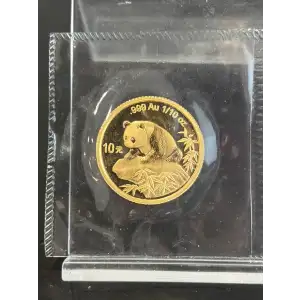
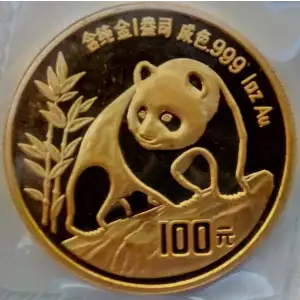
The opposite side features pandas in different settings and poses. The series is especially appealing to collectors who assemble year-by-year sets.
Although the designs generally change annually, there have been exceptions, including the repeated design used for 2001 and 2002.
Chinese Gold Panda Weights: Troy Ounces vs. Grams
One of the most important differences between older and newer Gold Pandas is the unit of measurement.
Before 2016, standard Gold Pandas were generally denominated by troy-ounce fractions.
Beginning in 2016, the regular bullion series transitioned to metric denominations measured in grams.
| Classic Troy-Ounce Size | Modern Metric Size | Important Difference |
|---|---|---|
| 1 oz / 31.1035 g | 30 g | 30 g contains less gold than 1 oz |
| 1/2 oz / 15.5517 g | 15 g | 15 g is slightly lighter |
| 1/4 oz / 7.7759 g | 8 g | 8 g is slightly heavier |
| 1/10 oz / 3.1103 g | 3 g | 3 g is slightly lighter |
| 1/20 oz / 1.5552 g | 1 g | 1 g is substantially lighter |
Are Chinese Gold Panda Coins Pure Gold?
Standard Chinese Gold Panda bullion coins are manufactured in .999 fine gold, meaning approximately 99.9% gold by mass.
This differs from .9999 fine bullion coins, which are approximately 99.99% gold. Always review the specifications of the exact issue.
Both .999 and .9999 gold are considered high-purity bullion. The relevant comparison is the amount of fine gold contained in each coin.
Popular Chinese Gold Panda Sizes
1 oz Gold Panda
Classic full-ounce bullion issued before the 2016 metric transition. Popular with buyers seeking traditional one-ounce gold coins.
30 Gram Gold Panda
Modern metric bullion format introduced in 2016. Contains 30 grams of nominal gold weight, rather than a full troy ounce.
1/2 oz Gold Panda
Classic fractional issue containing one-half troy ounce of nominal gold weight.
1/10 oz Gold Panda
Smaller pre-2016 bullion denomination, appealing to fractional gold buyers and date-set collectors.
1/20 oz Gold Panda
One of the smallest classic Gold Panda bullion denominations, containing approximately 1.555 grams of gold.
1 Gram Gold Panda
Modern small-format Panda coin introduced with the metric series. Contains one gram of nominal gold weight.
Product availability changes. Review the individual listings for exact dates, weights, designs, and current pricing.
Are Chinese Gold Pandas Collectible?
Yes. Chinese Gold Pandas have both bullion and numismatic markets.
While many buyers focus on the underlying gold content, collectors may seek specific years, fractional denominations, scarce varieties, original packaging, and professionally graded coins.
Changing Designs
Most years feature different panda artwork, supporting date-by-date collecting.
Earlier Issues
Coins from the 1980s and other earlier periods may attract collectors interested in the series' history.
Condition & Grading
Surface condition, authenticity, and professional certification can influence value.
Specific Dates
Mintage, surviving population, varieties, and collector demand can affect premiums.
Not every older Panda is rare, and not every low-mintage issue commands a substantial premium. Each coin should be evaluated individually.
Random-Year vs. Specific-Year Gold Pandas
Gold Panda products may be offered as random-year coins or as specifically dated individual pieces.
| Feature | Random-Year Panda | Specific-Year Panda |
|---|---|---|
| Year | Selected from available inventory | Exact year identified |
| Design | May vary | Corresponds to identified issue |
| Collector Use | General bullion purchasing | Date collecting and attribution |
| Premium | Depends on listing and market | May reflect date-specific demand |
| Condition | Depends on stated listing terms | Depends on individual product |
When buying a random-year Gold Panda, do not assume a particular date, design, mint, or condition unless the product listing explicitly guarantees it.
How Much Are Chinese Gold Panda Coins Worth?
Chinese Gold Panda prices are influenced by the current gold spot price, fine gold content, and market premium.
Additional premiums may reflect the coin's year, condition, rarity, availability, and collector demand.
Why Do Some Gold Pandas Cost More?
Two Gold Pandas containing the same amount of gold can have different prices. An ordinary random-year bullion coin may trade differently from a sought-after dated example or certified collectible.
Fractional gold coins also frequently carry higher percentage premiums than larger gold bullion products because manufacturing and distribution costs are spread across smaller quantities of gold.
Compare the total purchase cost, including applicable shipping, taxes, and payment-related charges.
How to Authenticate Chinese Gold Panda Coins
Authenticating a Gold Panda requires comparing the coin with specifications for its exact year and denomination.
Weight & Dimensions
Verify the expected weight, diameter, and other physical measurements for the identified issue.
Design & Lettering
Examine the panda design, Temple of Heaven details, Chinese inscriptions, denomination, and date.
Packaging & Condition
Some Gold Pandas are encountered in original protective packaging. Packaging and surface condition may affect collector interest.
Professional Evaluation
Appropriate precious metal testing and numismatic examination can help identify counterfeit or altered coins.
No single basic test guarantees authenticity. Collectible examples may benefit from professional authentication and grading.
Buy & Sell Chinese Gold Pandas in Clearwater, Florida
IDC Coin & Bullion, part of International Diamond Center, is headquartered in Clearwater, Florida.
IDC serves customers through 11 retail locations across Florida and Georgia, offering precious metals and numismatic services.
Customers in Clearwater, Tampa, St. Petersburg, Largo, Palm Harbor, and surrounding Tampa Bay communities can contact IDC about Chinese Gold Pandas and other international gold bullion coins.
IDC's ecommerce website also serves customers throughout the United States, subject to applicable ordering and shipping terms.
Have Chinese Gold Panda coins you want to sell? IDC evaluates a variety of bullion and collectible gold coins.
Visit What Do We Buy? or Find an IDC Location to learn more.
Chinese Gold Panda Coins: Frequently Asked Questions
What is a Chinese Gold Panda coin?
A Chinese Gold Panda is a government-issued gold bullion coin featuring panda imagery and the Temple of Heaven. The series began in 1982.
Are Chinese Gold Pandas real gold?
Genuine standard Gold Panda bullion coins are produced in .999 fine gold. Authentication is important when buying individual coins.
When did Chinese Gold Pandas begin?
The Chinese Gold Panda bullion series began in 1982.
Why do Chinese Gold Panda designs change?
Annually changing panda artwork is a defining characteristic of the series and appeals to date collectors.
When did Chinese Gold Pandas switch to grams?
The standard Gold Panda bullion series transitioned from troy-ounce denominations to metric gram weights in 2016.
Is a 30 gram Gold Panda the same as a 1 oz Panda?
No. One troy ounce equals approximately 31.1035 grams, so a 30-gram Panda contains less gold than a one-ounce Panda.
How much gold is in a 1 gram Gold Panda?
A standard one-gram Gold Panda contains one gram of nominal .999 fine gold bullion.
What does random-year Gold Panda mean?
It means the exact year supplied may vary based on available inventory. Check the product listing for guaranteed details.
Are 1985 Chinese Gold Pandas collectible?
Yes. Collectors may seek 1985 Gold Pandas for date sets and series collecting. Value depends on denomination, condition, authenticity, and demand.
Are Chinese Gold Pandas worth more than gold?
Some Gold Pandas carry collector premiums beyond their underlying gold content. Premiums vary by issue and condition.
How do I calculate a Gold Panda's melt value?
Multiply the coin's fine gold weight in troy ounces by the current gold spot price.
How can I authenticate a Chinese Gold Panda?
Compare its design, year, denomination, weight, dimensions, and metal composition with reliable specifications. Professional evaluation may be appropriate.
Does IDC buy Chinese Gold Panda coins?
IDC evaluates a variety of gold bullion and collectible coins. Contact the team about your specific Gold Panda issues.
Can I buy Chinese Gold Pandas in Clearwater, Florida?
IDC Coin & Bullion is headquartered in Clearwater, Florida. Contact the appropriate location to confirm purchasing options and inventory.
Explore More Gold Coin Categories
Shop Chinese Gold Panda Coins at IDC Coin & Bullion
Discover classic one-ounce Gold Pandas, modern 30-gram coins, fractional gold, and collectible dated issues. Browse available inventory online or contact IDC about buying and selling Chinese gold coins.
