Prehistoric Fossils
Explore natural-history specimens, including mammoth teeth and other evidence of prehistoric life.
Learn how species identification, completeness, condition, and provenance influence collectibility.

Can't find what you want?
IDC Coin & Bullion | Unique Finds
Explore extraordinary collectibles from prehistoric life and maritime history, including mammoth fossils, recovered shipwreck artifacts, and historic treasure.
Some collectibles preserve the history of human civilization. Others preserve evidence of life that existed thousands or millions of years before us.
IDC Coin & Bullion, part of International Diamond Center, brings these worlds together in its Fossils & Shipwrecks collection.
Our online catalog includes unusual natural-history specimens and historically significant maritime collectibles, subject to availability.
From a Columbian mammoth molar to an ingot associated with the 1622 Nuestra Señora de Atocha shipwreck, these objects offer a tangible connection to the past.
Browse the available items below and explore our guide to fossil identification, shipwreck provenance, authenticity, preservation, and collecting.
Explore natural-history specimens, including mammoth teeth and other evidence of prehistoric life.
Learn how species identification, completeness, condition, and provenance influence collectibility.
Discover artifacts associated with historic maritime voyages, including precious-metal objects recovered from documented wrecks.
Understand why documented recovery history and chain of ownership matter.
Fossils and shipwreck treasures offer different ways to experience history. Fossils preserve evidence of ancient life, while shipwreck artifacts connect collectors with human exploration, trade, and maritime disasters.
Both collecting specialties place considerable importance on authenticity, provenance, condition, and documentation.
The most desirable specimens are often those whose identity and history can be supported by reliable evidence.
Fossils are preserved remains, impressions, or traces of organisms from the geological past.
They may include teeth, bones, shells, plant material, and other evidence of prehistoric life.
Fossil collecting combines paleontology, natural history, geology, and the appreciation of unusual physical specimens.
Teeth and bones from mammoths, mastodons, and other extinct mammals are popular natural-history collectibles.
Fossilized shark teeth, shells, and other marine remains provide evidence of ancient ecosystems.
Preserved leaves, wood, and other botanical material document ancient plant life.
Tracks, burrows, and other preserved activity can reveal how extinct organisms behaved.
The Columbian mammoth (Mammuthus columbi) was a large, extinct relative of modern elephants.
It inhabited parts of North America during the Pleistocene epoch. Its fossils are associated with prehistoric environments that differed significantly from those of today.
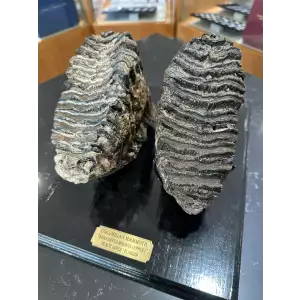
Mammoth molars contain multiple enamel plates adapted for grinding vegetation.
Their distinctive structure helps paleontologists study mammoth anatomy, feeding habits, and evolutionary relationships.
IDC's catalog includes a Columbian Mammoth Upper Molar Set described as recovered from Florida's Peace River in the Sarasota region.
The Peace River is well known among fossil enthusiasts for prehistoric vertebrate remains.
Collectors should review the individual specimen's condition, completeness, restoration disclosures, and available recovery history.
Florida has a rich prehistoric record, including fossils associated with ancient marine environments and large terrestrial mammals.
Rivers and sediment deposits can expose fossils that were preserved long before modern Florida's landscapes developed.
The Peace River is especially familiar to collectors of fossil shark teeth and prehistoric mammal remains.
Fossil recovery may be regulated according to location, ownership, specimen type, and applicable laws.
Historic shipwrecks provide evidence of maritime trade, exploration, transportation, and international commerce.
Recovered artifacts may include coins, silver ingots, gold objects, navigational equipment, ceramics, and other cargo.
Shipwreck artifacts are valued for more than their material composition.
Their historical associations, recovery documentation, condition, and legal provenance may contribute substantially to collector interest.
The Spanish galleon Nuestra Señora de Atocha sank during a hurricane in September 1622 near the Florida Keys.
The vessel was part of Spain's Tierra Firme fleet and carried valuable cargo associated with Spanish colonial trade.
The wreck became internationally famous following the discovery of its principal treasure deposit in 1985.
Artifacts associated with the Atocha include silver bars, coins, gold objects, and other historical materials.
Atocha artifacts connect collectors with seventeenth-century maritime history, colonial precious-metal production, and archaeological recovery.
Their appeal depends heavily on reliable attribution to the shipwreck and documented chain of ownership.
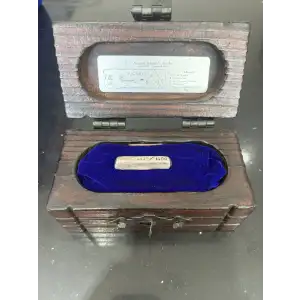
IDC lists a 1622 Nuestra Señora de Atocha Shipwreck Ingot, 603/1400.
The product description includes certificate information attributing recovery to Treasure Salvors, Inc.
The listing identifies a stated Ley fineness number of 2380/2400, a Grade 1 designation, and reference 0603/1400.
These details can help collectors investigate the ingot's attribution, historical context, and supporting documentation.
View the Atocha Shipwreck Ingot .
Silver ingots transported aboard Spanish colonial vessels may bear markings associated with production, assaying, taxation, and shipment.
Such marks can help researchers investigate how silver was produced, recorded, and transported during the colonial period.
Marks associated with examination of precious-metal content.
Numerical markings indicating a stated silver purity under a historical measurement system.
Stamps associated with colonial revenue and taxation procedures.
Numbers and markings that may assist with historical recordkeeping and attribution.
Interpretations of individual marks should be supported by qualified research and documentation specific to the artifact.
| Consideration | Fossils | Shipwreck Artifacts |
|---|---|---|
| Identification | Species or specimen attribution | Artifact type and historical attribution |
| Provenance | Documented collection location and ownership | Recovery records and ownership history |
| Condition | Completeness, fractures, repairs, restoration | Corrosion, conservation, damage, alterations |
| Documentation | Collection records, specialist reports | Certificates, recovery records, identifiers |
| Legal Status | Lawful collection and transfer | Lawful recovery, ownership, and transfer |
Certificates should be assessed according to the credibility of the issuer and the evidence supporting the claim.
Some fossils contain repaired or reconstructed sections, while some shipwreck artifacts require conservation to stabilize their condition.
Those treatments should be disclosed when relevant to a purchase.
Scarcity, significance, and collector demand influence desirability.
Reliable documentation can be especially important for valuable artifacts.
Completeness, repairs, conservation, and physical stability can affect value.
Recent sales of genuinely comparable specimens help establish market context.
A shipwreck silver ingot may command a premium beyond the intrinsic value of its silver.
Similarly, a fossil's collectible value is generally determined by scientific interest, rarity, quality, and demand rather than precious-metal content.
Before purchasing an artifact, review the item's exact description and photographs.
For fossils, confirm the identification, dimensions, completeness, restoration, and known origin.
For shipwreck artifacts, investigate the claimed wreck, recovery documentation, legal ownership, and available certificates.
Consider whether specialist examination is appropriate before a significant purchase.
Review applicable shipping restrictions and import/export requirements, particularly for internationally sourced fossils and archaeological objects.
Fossils and recovered maritime objects may require different storage and conservation conditions.
Protect fossils from unnecessary handling, impact, and unsuitable environmental conditions.
Historic marine artifacts can contain residual salts or corrosion products that require specialist conservation.
Avoid aggressive cleaning, polishing, chemical treatment, or restoration without qualified guidance.
Keep certificates, collection records, and other provenance documents together with the artifact's inventory information.
IDC Coin & Bullion, part of International Diamond Center, is headquartered in Clearwater, Florida.
IDC operates 11 retail locations across Florida and Georgia and offers collectibles online to customers nationwide.
Florida has a distinctive connection to both prehistoric fossils and maritime history.
The Peace River is associated with fossil collecting, while the Florida Keys are closely connected with the history of the Atocha shipwreck.
Collectors in Clearwater, Tampa, St. Petersburg, Largo, Dunedin, Palm Harbor, and surrounding Tampa Bay communities can explore IDC's unusual historical collectibles online.
For questions about a particular artifact or availability at a retail location, contact IDC before visiting.
A preserved remain, impression, or trace of an organism from the geological past.
Yes. Genuine fossilized mammoth teeth are recognized prehistoric specimens, although identification and authenticity should be verified for individual examples.
An extinct North American mammoth species known scientifically as Mammuthus columbi.
Prehistoric mammal fossils have been recovered from various Florida deposits, including river systems such as the Peace River.
IDC has listed a Columbian Mammoth Upper Molar Set in its Fossils & Shipwrecks category, subject to current availability.
A Spanish galleon that sank during a hurricane near the Florida Keys in 1622 while transporting valuable cargo.
The principal treasure deposit associated with the wreck was discovered in 1985.
Recovered materials included silver ingots, coins, gold objects, and other historical cargo and artifacts.
Yes. Documented Atocha ingots can attract collectors interested in maritime history, Spanish colonial trade, and precious metals.
Provenance is the documented history of an object's origin, recovery, ownership, and transfer.
Review recovery documentation, identifying marks, certificates, ownership history, and specialist examination where appropriate.
No. Shipwrecks can contain ceramics, tools, navigational objects, personal belongings, and many other materials.
Some fossil collecting is permitted, but rules vary by location, ownership, specimen type, and applicable permit requirements.
Use caution. Improper cleaning or chemical treatment can permanently damage historic or scientifically important material.
IDC Coin & Bullion offers a Fossils & Shipwrecks category featuring selected natural-history and maritime collectibles, subject to inventory availability.
IDC Coin & Bullion is headquartered in Clearwater, Florida, and offers unusual collectibles through its online store.
Explore prehistoric mammoth fossils, historic shipwreck artifacts, and other unusual collectibles at IDC Coin & Bullion.
Browse the current Fossils & Shipwrecks inventory or discover more extraordinary items in Unique Finds.