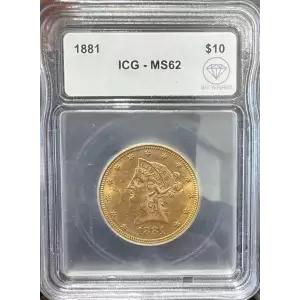
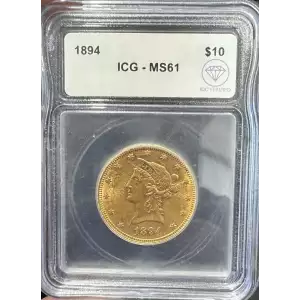
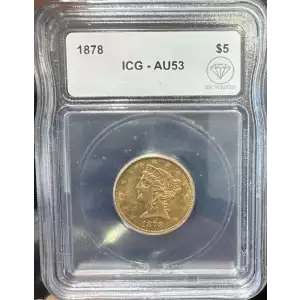
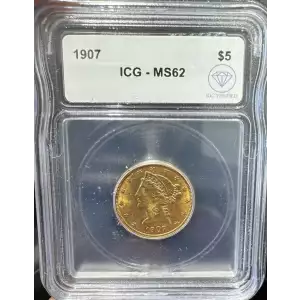
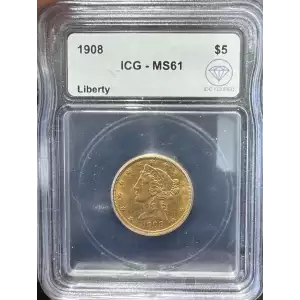
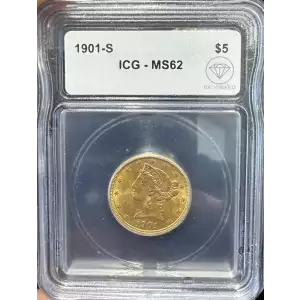
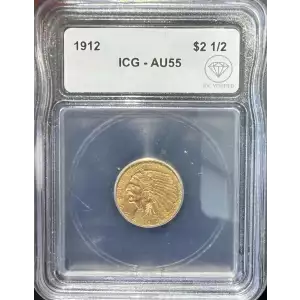
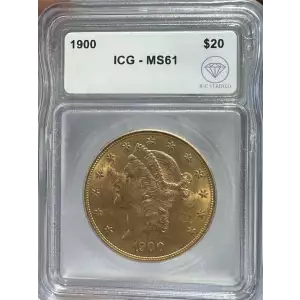
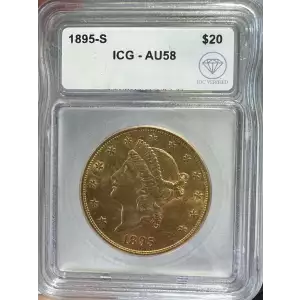
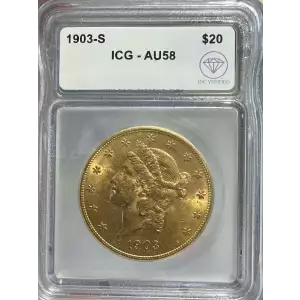
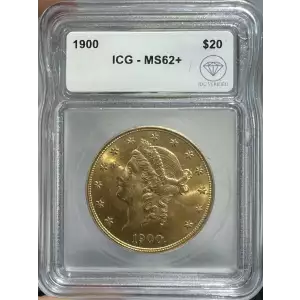
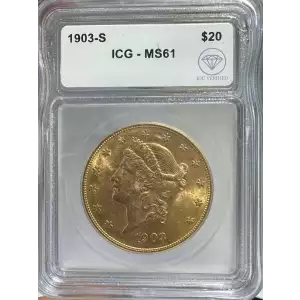
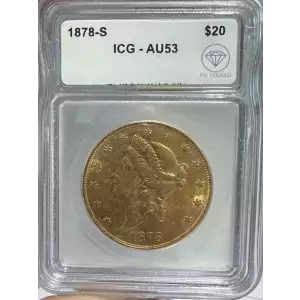
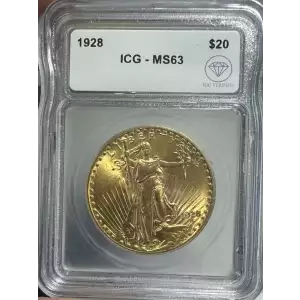
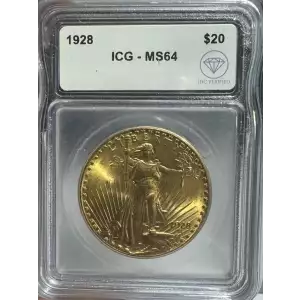
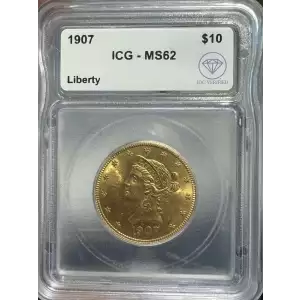
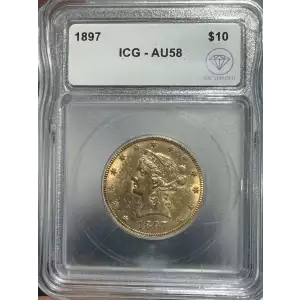
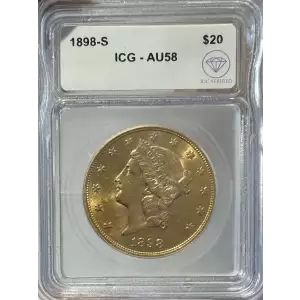
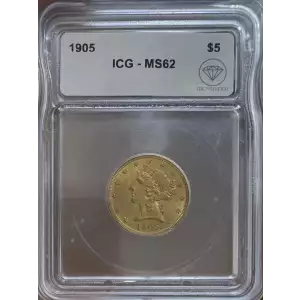
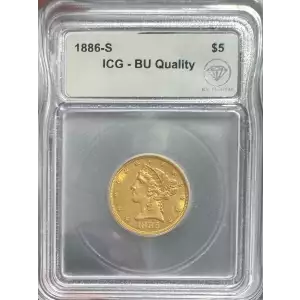
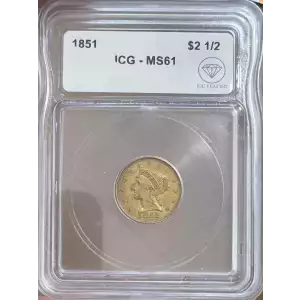
Liberty Head Gold
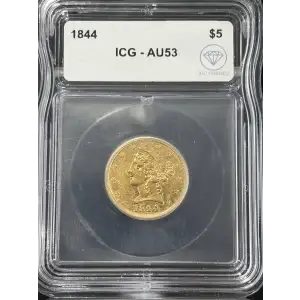
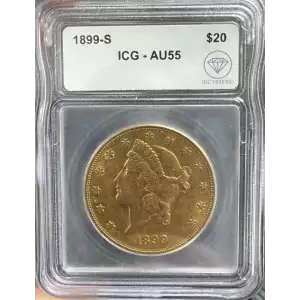
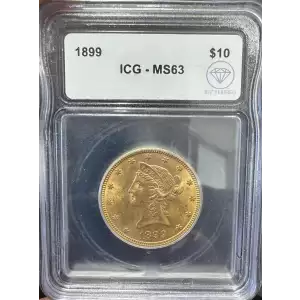
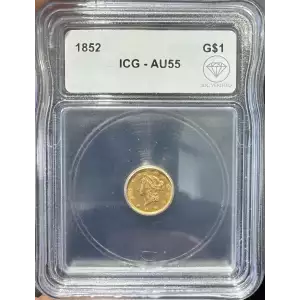
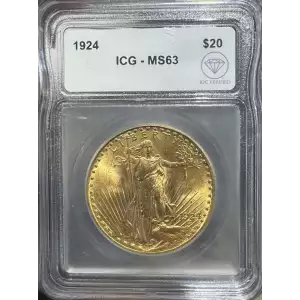
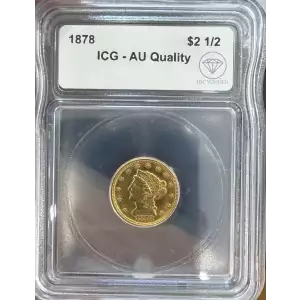
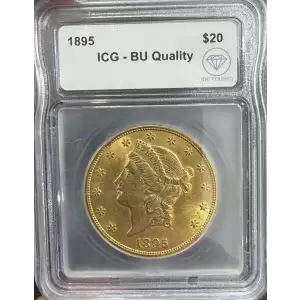
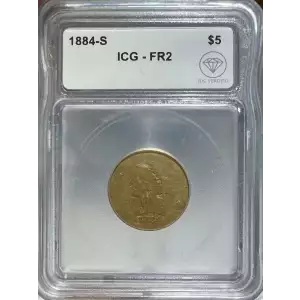
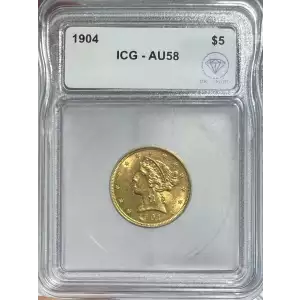
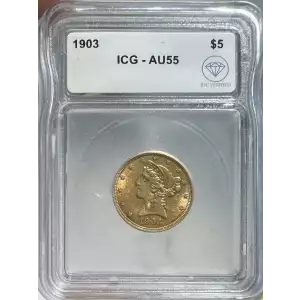
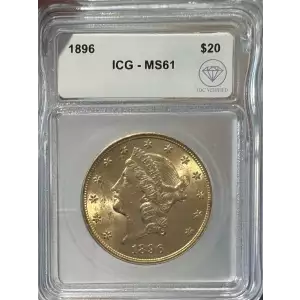
Explore classic U.S. gold coinage, including Liberty Head Quarter Eagles, Half Eagles, Eagles, and Double Eagles.


Can't find what you want?
IDC Coin & Bullion | Historic U.S. Gold
Discover historic American gold coins with independent ICG grading and IDC's additional verification process. Explore Liberty Head, Indian Head, and Saint-Gaudens gold coins in collectible dates and grades.
Pre-1933 U.S. gold coins represent an important chapter in American monetary history. Originally issued for circulation, these coins combine precious-metal content with historic designs, mintmarks, and numismatic interest.
The IDC Verified Pre-1933 Gold collection features selected Gold Dollars, Quarter Eagles, Half Eagles, Eagles, and Double Eagles evaluated by Independent Coin Graders (ICG) and reviewed through the IDC Verified program.
Participating coins feature the distinctive IDC Verified Diamond Label. Review each listing for its exact date, mintmark, numerical grade or condition designation, and certification details.
Browse available coins below to compare historic gold denominations, certified condition, and collectible characteristics.
Explore classic U.S. gold coinage, including Liberty Head Quarter Eagles, Half Eagles, Eagles, and Double Eagles.
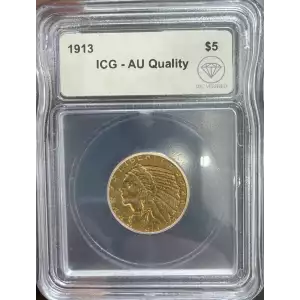
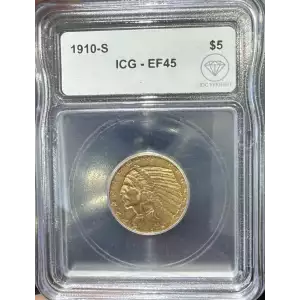
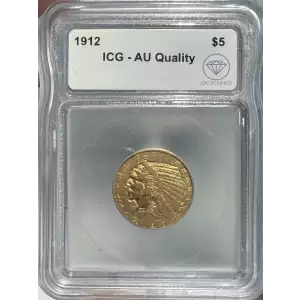
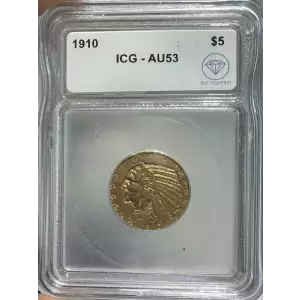
Discover the distinctive $2.50 and $5 Indian Head gold coins with their unusual incuse designs.
Browse the celebrated $20 gold design introduced in 1907, including certified Mint State examples.
Collector note: A certified grade describes condition, not rarity. A common-date Mint State coin and a scarce circulated coin can have very different values. Review date, mintmark, originality, certification, and comparable sales.
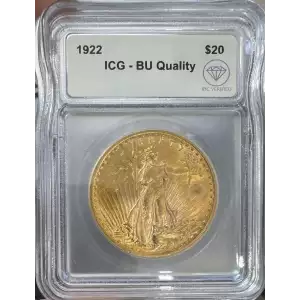 Read more about1922 Double Eagle $20 Gold Saint Gaudens ICG BU Quality IDC Verified
Call Us for more Information
Pre-1933 American gold coins were issued during an era when gold played a central role in the United States monetary system. Today, these historic coins are collected for their precious-metal content, designs, condition, rarity, and connection to American economic history.
Popular denominations include the $1 Gold Dollar, $2.50 Quarter Eagle, $5 Half Eagle, $10 Eagle, and $20 Double Eagle.
The IDC Verified collection offers selected examples evaluated by Independent Coin Graders (ICG) and included in IDC's additional verification program.
Buyers can explore historic U.S. gold coins by date, mintmark, denomination, design type, and certified grade.
The term Pre-1933 gold generally refers to historic United States gold coins issued before the major changes to American gold ownership and monetary policy in 1933.
Gold coins once circulated alongside paper currency and other coinage. They were produced in denominations ranging from small Gold Dollars to substantial $20 Double Eagles.
During the Great Depression, federal gold policy changed dramatically. Executive Order 6102, issued in April 1933, required the delivery of certain gold coins, bullion, and certificates, subject to stated exceptions.
The order and subsequent monetary changes helped end the former system of circulating gold coinage.
Today, historic U.S. gold coins remain legal to own and are actively collected, bought, and sold.
Historical distinction: Not every surviving Pre-1933 gold coin is rare, and the term does not automatically imply a special legal or investment status.
Most standard historic U.S. gold coins in these denominations were struck in an alloy of 90% gold and 10% copper.
Their gold content differs according to denomination.
| Denomination | Face Value | Approx. Fine Gold Content |
|---|---|---|
| Gold Dollar | $1 | 0.04837 troy oz |
| Quarter Eagle | $2.50 | 0.12094 troy oz |
| Half Eagle | $5 | 0.24187 troy oz |
| Eagle | $10 | 0.48375 troy oz |
| Double Eagle | $20 | 0.96750 troy oz |
These are approximate standard specifications for the relevant historic U.S. gold denominations. Individual coins should be evaluated according to their exact issue and condition.
No. A standard $20 Double Eagle contains approximately 0.9675 troy ounce of fine gold, not a full troy ounce.
That distinction matters when comparing Double Eagles with modern one-ounce gold bullion coins.
Liberty Head gold coinage spans several denominations and represents some of the most familiar designs in nineteenth-century American numismatics.
The $2.50 Liberty Head Quarter Eagle was issued from 1840 through 1907. It features a portrait of Liberty designed by Christian Gobrecht.
The $5 Liberty Head Half Eagle was produced from 1839 through 1908. Collectors pursue these coins by date, mintmark, grade, and type.
The $10 Liberty Head Eagle was introduced in 1838 and remained in production through 1907.
These coins offer collectors opportunities to study different mint facilities, historical periods, and levels of preservation.
The $20 Liberty Head Double Eagle was introduced in 1850 and continued through 1907.
Designed by James B. Longacre, the series became closely associated with the expansion of American gold production and international commerce.
Collectors often seek Philadelphia and San Francisco issues, as well as coins from other historic U.S. branch mints.
The Indian Head $2.50 and $5 gold coins are distinctive for their incuse designs, with principal design elements recessed below the coin's field.
Both designs were created by Bela Lyon Pratt and introduced in 1908.
Issued from 1908 through 1915 and again from 1925 through 1929, the Indian Head Quarter Eagle appeals to collectors seeking a compact historic gold denomination.
The Indian Head Half Eagle was issued from 1908 through 1916, with additional issues in 1929.
Condition, original surfaces, date, and mintmark can significantly influence the value of these coins.
Collector tip: Incuse design does not mean a coin is damaged. The recessed relief is an intentional feature of the Pratt design.
The Saint-Gaudens Double Eagle, introduced in 1907, is among the most admired designs in American coinage.
Created by sculptor Augustus Saint-Gaudens, the obverse depicts Liberty striding forward with a torch and olive branch. The reverse features a flying eagle.
The series was issued from 1907 through 1933, although the 1933 issue has a distinct legal and historical history.
The famous 1907 High Relief Double Eagle was struck with a more sculptural design than later regular-relief circulation issues.
Collectors distinguish High Relief, regular-relief, and other recognized design varieties.
Saint-Gaudens Double Eagles are often collected in Mint State grades such as MS-62, MS-63, and MS-64.
Higher numerical grades generally reflect stronger preservation, but market value also depends on date, mintmark, and collector demand.
U.S. gold coins were produced at several historic mint facilities. The issuing mint can be an important factor in rarity and value.
| Mintmark | Mint Facility | Collector Interest |
|---|---|---|
| None | Philadelphia | Many historic issues carry no mintmark. |
| S | San Francisco | Important Western gold coinage and numerous collectible issues. |
| D | Denver or Dahlonega, depending on date and series | Mint attribution requires historical context. |
| O | New Orleans | Historic Southern branch-mint gold coinage. |
| CC | Carson City | Strong interest in Western mining history and limited-survival issues. |
| C | Charlotte | Specialized Southern branch-mint gold collecting. |
Mintmark locations vary by denomination and design type.
A mintmark does not automatically make a coin rare. Always evaluate the exact date-and-mintmark combination.
IDC Verified is an authentication and preservation program offered by IDC Coin & Bullion, part of International Diamond Center.
Participating coins undergo an initial IDC numismatic review, independent evaluation through ICG, and an additional IDC authenticity review.
Selected coins are reviewed for identifying characteristics and authenticity considerations.
ICG supplies the applicable grading or authentication opinion for the coin.
IDC performs a further authenticity review as part of its program.
Eligible holders carry the distinctive label identifying participation in IDC Verified.
Important distinction: ICG provides the independent grading or authentication opinion. IDC Verified is IDC's additional review program, not a separate grading service.
Certified gold coins may receive numerical grades using the 70-point Sheldon scale.
The grade reflects the grading service's assessment of condition, not the coin's overall rarity.
| Grade | General Description |
|---|---|
| FR-2 / AG-3 | Very heavily worn, with limited surviving design detail. |
| G-4 to VF-35 | Circulated grades with varying levels of wear and detail. |
| XF-40 to XF-45 | Light circulation wear with substantial design detail. |
| AU-50 to AU-58 | About Uncirculated, with slight wear. |
| MS-60 to MS-62 | Uncirculated, with noticeable marks or other surface characteristics. |
| MS-63 to MS-64 | Uncirculated, with generally stronger overall preservation. |
| MS-65 and higher | Higher Mint State preservation under the service's grading standards. |
AU Quality is descriptive condition terminology associated with an About Uncirculated appearance or quality level.
It should not be treated as a specific numerical grade unless the holder explicitly assigns one.
BU Quality refers to Brilliant Uncirculated quality in descriptive terms.
It is not equivalent to a specific Mint State numerical grade.
A details designation may identify an authenticated coin with a condition issue such as cleaning, damage, or alteration.
Buyers should review both the stated grade and any condition qualifiers on the holder.
Historic U.S. gold coins can have both precious-metal value and numismatic value.
Fine gold weight and the gold spot price affect underlying metal value.
Some issues are considerably scarcer than others.
Wear, marks, luster, and preservation affect collector demand.
Cleaning, damage, and alteration can influence market value.
Particular designs, mint facilities, and issues may attract specialists.
Comparable sales and current collector preferences help establish prices.
A common-date $20 Double Eagle may trade primarily in relation to gold content and a market premium.
A scarce-date Quarter Eagle or branch-mint Half Eagle may command a much larger numismatic premium.
Neither certification nor historical age guarantees future appreciation.
Before purchasing, identify the coin's exact denomination, design, date, mintmark, and certification details.
Compare Gold Dollars, Quarter Eagles, Half Eagles, Eagles, and Double Eagles.
Research the specific issue, not just the general coin type.
Confirm numerical grade, descriptive designation, and condition qualifiers.
Use comparable coins with matching date, mintmark, grade, and relevant characteristics.
Examine available photographs for strike quality, luster, contact marks, color, and originality.
Some historic certified gold coins are individual inventory pieces and may not be replaceable with identical examples.
Historic gold coins should be handled carefully to preserve their surfaces.
Protective third-party holders help reduce direct handling and contact.
Keep certified coins in a secure, stable environment and avoid unnecessary exposure to moisture or contaminants.
Do not polish or clean historic gold coins. Improper cleaning can permanently alter original surfaces and reduce collectible value.
Retain invoices, certification details, and photographs with your collection records.
IDC Coin & Bullion, part of International Diamond Center, is headquartered in Clearwater, Florida.
IDC operates 11 retail locations across Florida and Georgia and serves coin collectors nationwide through its online store.
Collectors in Clearwater, Tampa, St. Petersburg, Largo, Dunedin, Palm Harbor, Safety Harbor, Pinellas Park, and the greater Tampa Bay area can explore IDC's certified historic U.S. gold inventory online.
IDC purchases qualifying collectible coins, gold bullion, and precious metals.
If you own Liberty Head gold, Indian Head gold, Saint-Gaudens Double Eagles, or an inherited U.S. gold coin collection, contact IDC about its purchasing process.
Offers may depend on authenticity, gold content, date, mintmark, condition, rarity, and current demand.
Historic American gold coins issued before the major changes to U.S. gold ownership and monetary policy in 1933.
Yes. Historic U.S. gold coins are legal to own and are actively bought and sold in the numismatic market.
Selected historic U.S. gold coins participating in IDC's verification program with independent ICG evaluation and additional IDC review.
Independent Coin Graders (ICG) provides independent grading or authentication opinions for participating coins.
No. IDC Verified is IDC's additional review program. ICG provides the independent grading or authentication opinion.
Historic U.S. gold coinage included Gold Dollars, Quarter Eagles, Half Eagles, Eagles, Double Eagles, and other denominations and types.
A standard Liberty Head or Saint-Gaudens $20 Double Eagle contains approximately 0.9675 troy ounce of fine gold.
A standard historic $10 Eagle contains approximately 0.48375 troy ounce of fine gold.
A standard historic $5 Half Eagle contains approximately 0.24187 troy ounce of fine gold.
Most standard historic U.S. gold coins in the major denominations contain 90% gold and 10% copper, rather than .9999 fine gold.
A historic $20 U.S. gold coin introduced in 1907, featuring Augustus Saint-Gaudens' celebrated Liberty design.
A $5 U.S. gold coin designed by Bela Lyon Pratt, notable for its recessed or incuse design elements.
MS-63 is a Mint State numerical grade describing an uncirculated coin under the grading service's standards.
AU-58 means About Uncirculated, with slight circulation wear under the grading service's standards.
It is descriptive condition terminology and should not be interpreted as a specific numerical grade unless one is explicitly assigned.
No. Rarity varies significantly by denomination, date, mintmark, condition, and surviving supply.
Cleaning can alter original surfaces and reduce collectible value. Avoid cleaning historic gold coins without specialist guidance.
IDC considers qualifying historic U.S. gold coins and collections for purchase. Contact IDC about your specific items.
IDC Coin & Bullion is headquartered in Clearwater, Florida, and offers certified historic U.S. gold coins through its nationwide online store.
Explore historic American gold coins, including Liberty Head, Indian Head, and Saint-Gaudens designs with ICG certification and IDC's additional verification program.
Compare dates, mintmarks, denominations, grades, and available inventory.