
Gold Fundamentals
What Is Gold Bullion?
Gold bullion is physical gold manufactured in standardized forms, typically coins and bars, valued primarily for its fine-gold content.
Direct Ownership
Coins and bars allow buyers to hold physical gold rather than a financial instrument tied to its price.
Coins & Bars
Choose from sovereign-mint coins, fractional denominations, and bars from established refiners.
Gold Price & Premium
Retail bullion prices reflect the underlying gold value plus a product-specific premium.
Government-Issued Bullion
Buy Gold Bullion Coins
Government-minted gold coins combine standardized fine-gold content with recognizable national designs.
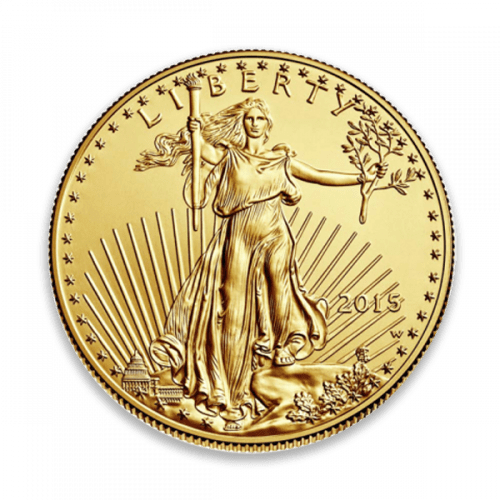
American Gold Eagle
First issued in 1986, Gold Eagles contain their stated fine-gold weight in a durable 22-karat alloy. Common denominations are 1 oz, 1/2 oz, 1/4 oz, and 1/10 oz.
American Gold Buffalo
Introduced in 2006, the standard bullion Gold Buffalo contains one troy ounce of .9999 fine gold and features designs adapted from the Buffalo Nickel.
Canadian Gold Maple Leaf
Modern Gold Maple Leafs are typically struck in .9999 fine gold and offered in several denominations.
Krugerrands, Britannias & More
Explore South African Krugerrands, British Britannias, Austrian Philharmonics, Australian Kangaroos, and other world gold coins when available.
Refined Precious Metals
Buy Gold Bars
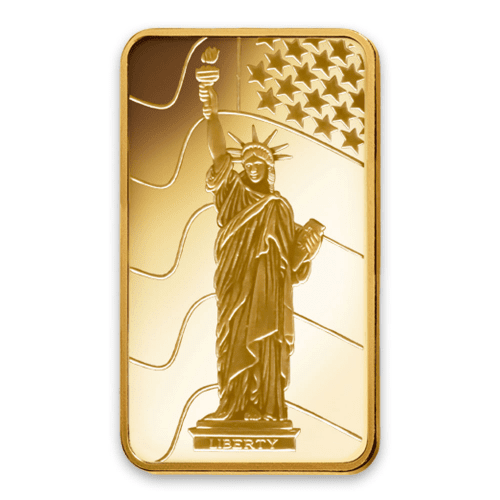
Gold bars offer standardized fine-gold weights in a range of sizes, with prices influenced by the refiner, fabrication costs, and market demand.
1 oz Gold Bars
One-troy-ounce bars are a widely recognized bullion format. One troy ounce equals approximately 31.1035 grams.
Gram Gold Bars
One-, five-, and ten-gram bars offer smaller purchase sizes, although premiums per ounce can be higher.
PAMP, Valcambi & Others
Compare available bars by refinery, fineness, weight, assay packaging, and serial-number information where applicable.
Compare Bullion Products
Gold Coins vs. Gold Bars
| Feature | Gold Coins | Gold Bars |
|---|---|---|
| Producer | Typically government mints | Refiners and private mints |
| Face Value | Often an official denomination | None |
| Purity | Varies; often 22K or .9999 | Often .9999 fine |
| Premiums | May reflect sovereign-mint recognition | Larger bars may have lower premiums per ounce |
| Resale | Depends on product recognition and condition | Depends on refiner, size, and demand |
Neither format is universally better. Compare total cost per fine troy ounce, product recognition, storage, and expected resale flexibility.
Bullion Specifications
Understanding Gold Purity & Weight
| Specification | Meaning |
|---|---|
| 24-Karat | Nearly pure gold; many bullion products are .999 or .9999 fine |
| 22-Karat | Approximately 91.67% gold by total weight |
| .9999 Fine | 99.99% gold by weight |
| 1 Troy Ounce | Approximately 31.1035 grams |
| Fine-Gold Weight | The actual weight of pure gold contained in a product |
Precious Metals Pricing
Gold Spot Price & Bullion Premiums
Physical bullion prices are influenced by the market value of the contained gold and a premium associated with the particular product.
Gold Spot Price
The gold spot price is typically quoted in U.S. dollars per troy ounce and changes with market conditions.
Physical Gold Premium
Premiums reflect fabrication, distribution, inventory, dealer costs, product demand, and availability.
How to Calculate a Gold Bullion Premium
Premium = Purchase Price − Spot Value of Fine Gold
Compare premiums on an equivalent fine-gold basis and account for shipping, taxes where applicable, and other transaction costs.
What Affects the Gold Price?
Gold prices respond to factors including monetary policy, interest rates, currency movements, investor demand, central-bank activity, and global economic uncertainty. Gold can rise or fall in value.
Bullion & Numismatics
Gold Bullion vs. Rare Gold Coins
Modern Gold Bullion
Primarily purchased for metal content, with additional premiums depending on product, condition, and market demand.
Numismatic Gold
Rare or historic gold coins may carry substantial collector value based on date, mintmark, condition, rarity, and demand.
Explore IDC Verified Pre-1933 Gold and learn about IDC Verified , which combines applicable ICG authentication or grading with IDC's additional review for selected products.
Buyer Checklist
How to Buy Gold Bullion
Choose Coins or Bars
Decide which bullion format suits your needs.
Check Authenticity
Review the mint, refinery, and product specifications.
Confirm Fine-Gold Weight
Compare the amount of pure gold, not only gross weight.
Compare Premiums
Evaluate total price against the metal's spot value.
Review Condition
Consider packaging, surfaces, and certification where relevant.
Consider Resale
Review recognition, liquidity, and possible dealer spreads.
Confirm Availability
Check the current listing and checkout terms.
Plan Secure Storage
Protect your bullion and retain purchase records.
Bullion Preservation
Storing Physical Gold
Store gold coins and bars in a secure, dry location. Minimize unnecessary handling and protect collectible finishes from scratches and abrasion. Keep original packaging, assay documents, and purchase records when available.
IDC Coin & Bullion
Buy or Sell Gold Bullion with IDC
IDC Coin & Bullion is the precious-metals and numismatic division of International Diamond Center, headquartered in Clearwater, Florida. Our online marketplace serves customers throughout the United States.
International Diamond Center operates 11 retail locations in Florida and Georgia, serving the Clearwater, Tampa, Orlando, Altamonte Springs, Sarasota, Naples, Lakeland, Gainesville, Port St. Lucie, and Savannah markets.
IDC also purchases qualifying gold coins, bars, precious metals, and coin collections. In-store inventory and specialized numismatic services may vary; contact your preferred location before visiting.
Frequently Asked Questions
Gold Bullion FAQs
What is gold bullion?
Gold bullion is physical gold, typically coins or bars, valued primarily for its fine-gold content.
Is it better to buy gold coins or gold bars?
Neither is always better. Coins may offer government-mint recognition; larger bars may have lower premiums per ounce. Compare total costs and resale preferences.
What is the difference between an American Gold Eagle and Gold Buffalo?
Gold Eagles are 22-karat alloy coins containing their stated fine-gold weight. Standard Gold Buffalos are struck in .9999 fine gold.
Does a 1 oz American Gold Eagle contain one full ounce of gold?
Yes. The one-ounce American Gold Eagle contains one troy ounce of pure gold; alloy metals increase its total weight.
What does .9999 fine gold mean?
It means the product is 99.99% gold by weight.
How much does one troy ounce of gold weigh?
One troy ounce equals approximately 31.1035 grams.
Why is gold bullion priced above spot?
Retail premiums reflect manufacturing, distribution, dealer costs, and product-specific demand and availability.
Can gold bullion lose value?
Yes. Gold prices fluctuate, and buying and selling spreads can affect returns.
Does IDC buy gold coins and bars?
IDC Coin & Bullion purchases qualifying gold bullion and other precious metals. Visit our Sell to Us page for details.
Can I purchase gold bullion at an IDC showroom?
Product availability and services vary by location. Contact your preferred showroom before visiting for a specific bullion product.